
Digital Printing vs Screen Printing: Which Is Better for Flags?
Digital printing and screen printing are production approaches rather than competing quality grades. A digital workflow reproduces artwork from a file through a compatible printer; screen printing uses prepared screens to apply colour. The better choice for a flag depends on the artwork, textile, quantity, colour expectations and finishing. Ask suppliers to explain the proposed method against your particular design instead of assuming one method is best for every order.
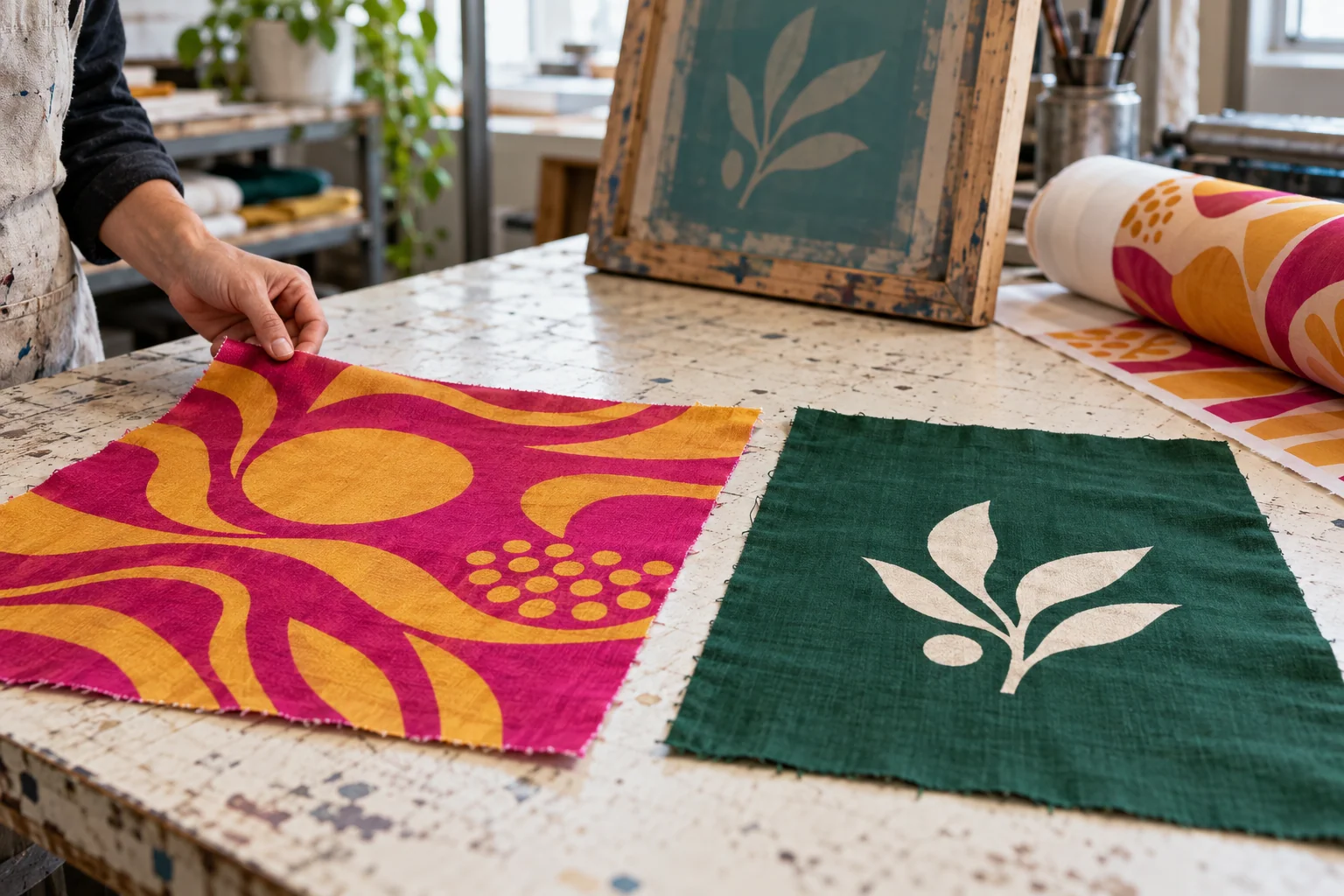
Consider the artwork first
Photographs, gradients and numerous colour variations can be reasons to discuss an appropriate digital textile workflow. A simple emblem with clearly separated colours may be considered for screen production. Fine elements should still be checked on the actual material. A process that can reproduce detail on smooth paper does not automatically reproduce it identically on an open or textured flag cloth.
Separate setup from finished cost
Screens introduce preparation for the design and its colour arrangement. Digital production has its own setup, colour management and textile handling requirements. Ask for comparable quotations at the quantities you actually need, including samples and finishing. Avoid generic claims that a method becomes cheaper at a universal number of flags: the artwork, size, fabric and production arrangement can change that comparison.
Compare colour in context
The number of colours is not the only concern. Check solid coverage, the smallest important detail and the reverse appearance of the selected cloth. Supply brand references and identify the colours that matter most. A sample with a different fabric or different ink system may not predict your result. Agree what is being approved and retain that reference for subsequent runs.
Check the construction as well
Both printed textiles need suitable conversion into a finished flag. Ensure the quotes specify the same dimensions, hems, sleeve or header and attachment arrangement. Compare single-layer and independently readable-face constructions separately. If one proposal includes a pole kit or a heavier cloth, its price cannot be treated as a direct comparison with an otherwise different graphic-only product.
Ask for an order-specific recommendation
Send Orient Uniforms FZE the print-ready design, SKU, quantities and location. Mention future repeat orders or several artwork variants, because these affect planning. Ask which process is proposed, why it suits the design and what sample will be supplied for approval. Confirm the exact materials and schedule in writing. No general comparison can establish the price or performance of an unquoted production method.
Questions & answers
Is digital printing always better for a small order?
It may be a useful option, but compare the actual design, fabric, finishing and quoted quantity before deciding.
Can I compare a screen-printed sample with a digital sample?
Yes, provided the textile, dimensions and intended use are comparable and each proposed construction is clearly identified.