
How Does Dye Sublimation Flag Printing Work Step by Step?
The dye sublimation flag printing process begins with approved artwork and a textile matched to the selected ink and equipment. In a transfer workflow the image goes onto transfer paper, then reaches the fabric through controlled heat processing. A direct workflow prints onto suitable textile before fixation. Buyers do not need machine settings to place a good order; they need clear approval points and a complete finished-product specification.
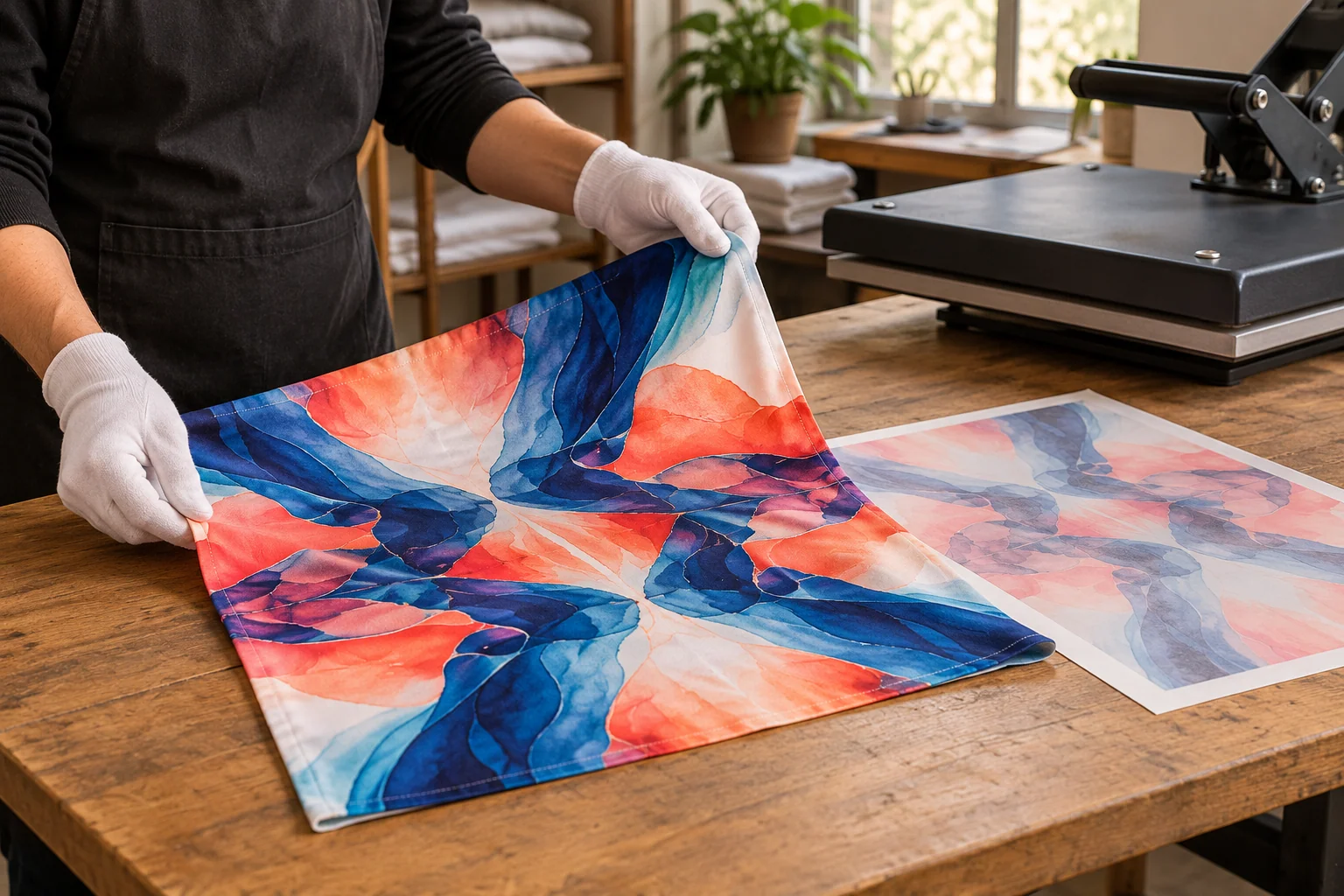
Confirm the artwork and template
Agree the flag shape, final size, hoist edge and any sleeve or hem allowances before printing. Check logo version, wording, orientation and the intended reverse view. If the design has several variants, label them by branch or event rather than using ambiguous file names such as final-new. Ask the production team for its template and the file settings appropriate to the actual workflow.
Prepare the output for the chosen route
The operator uses the relevant production software and colour workflow to prepare the image. Transfer work involves suitable paper; direct textile work relies on an appropriate printable fabric. These routes have different handling requirements. A customer should not reverse artwork speculatively before sending it: agree whether the supplied file should be normal-reading and let the production team confirm the required output orientation.
Fix the print under controlled conditions
Heat fixation must follow the validated combination of ink, cloth and equipment. Generic online temperatures or timing instructions are not a substitute for manufacturer guidance and production testing. An uneven or incompatible process can alter the final appearance. Ask to see the completed textile, because an unprocessed transfer-paper image is not a reliable approval reference for the finished flag colour.
Convert printed cloth into the product
The printed textile still needs cutting, stitching and attachments. A shaped event flag must fit its matching pole; a rectangular company flag may require a header and specified connection points. Review seam placement near artwork and check that the usable graphic has not been lost inside a pocket. Approve any construction change before the remainder of the order is completed.
Keep a practical quality record
Check the finished dimensions, colour under normal viewing light, front and reverse appearance, attachment positions and fit. Retain the approved artwork reference and sample details together with the product SKU. When enquiring with Orient Uniforms FZE, provide quantity, location and target date so proofing can be included in the discussion. Confirm the production schedule in the quote rather than assuming every workflow has the same turnaround.
Questions & answers
Should I approve the transfer paper colour?
Approve the finished textile. Transfer output can appear different before the image is processed onto the fabric.
Can I prescribe one heat setting for all flags?
No. Settings depend on the actual textile, ink and equipment and should follow the relevant manufacturer guidance.