
How to Choose a Flag Base for Sand, Concrete and Indoor Floors
Choose a feather flag base for the exact display system and supporting surface, rather than by appearance or weight alone. Sand, concrete and indoor floors need different approaches. The supplier should confirm compatibility for the model, size and printed construction. Give the intended location and operating conditions in the enquiry, and use the specific manufacturer guidance instead of a universal online base recommendation.
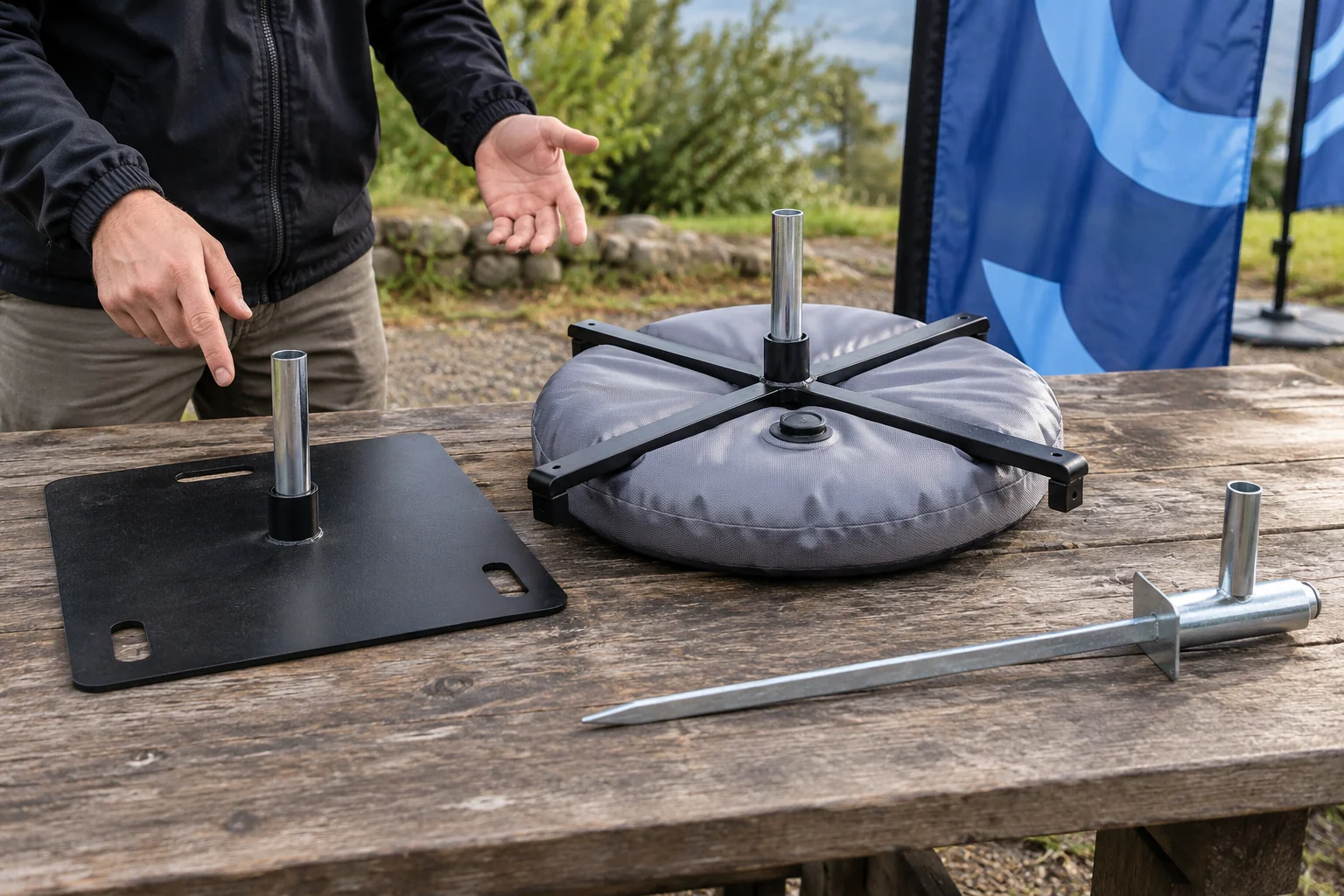
Start with the connection and model
Identify the pole manufacturer or system reference, standing height and graphic construction. Ask which bases are approved for that combination. A socket that appears to fit does not by itself establish suitability. If you already own a base, send photographs and any label or part number. Keep replacement parts traceable so an event crew does not mix superficially similar components from different kits.
Review paved and concrete surfaces
A compatible weighted plate, cross base or fillable base may be considered depending on the system. Ask for its required operating configuration, footprint and surface requirements. Do not add improvised weights or place equipment on steps to solve an uneven position. Check access routes and trip hazards with the venue, and keep the display within its approved position throughout the event.
Treat sand and soil differently
A system-specific ground spike or screw anchor can be an option where the manufacturer and venue permit it. The depth and condition of the ground still matter. Check permission to penetrate the surface and identify any buried services through the responsible site team. A spike is not an appropriate choice simply because a location is described as outdoors; paving, decks and filled event floors need separate consideration.
Check indoor floor constraints
Indoors, consider floor finish, base footprint, ceiling clearance and pedestrian movement. Ask whether the venue requires protective measures compatible with the base instructions. Keep the flag away from doors and routes where people may catch the pole or fabric. A base accepted for an indoor setting should not automatically be moved outside, where exposure and the equipment operating requirements can be different.
Make responsibility clear
Keep the correct base with the flag kit and attach the model instructions to the event handover. Assign someone to check the connection and respond to changing conditions. Manufacturer base tables can vary by model size, so reassess the base if the graphic or pole changes. Send Orient Uniforms FZE the chosen SKU, venue surface and equipment details when requesting a compatible complete package or replacement component.
Questions & answers
Is the heaviest base always the safest choice?
Weight alone is not enough. Compatibility, footprint, connections, operating conditions and the complete manufacturer specification matter; use the base intended for the particular assembly.
Can I place an indoor base in sand?
Do not assume it is suitable. Explain the exact beach or sand location and ask for the manufacturer-approved configuration and venue permission for the selected system.