
What Is Dye Penetration in Flag Printing and Why Does It Matter?
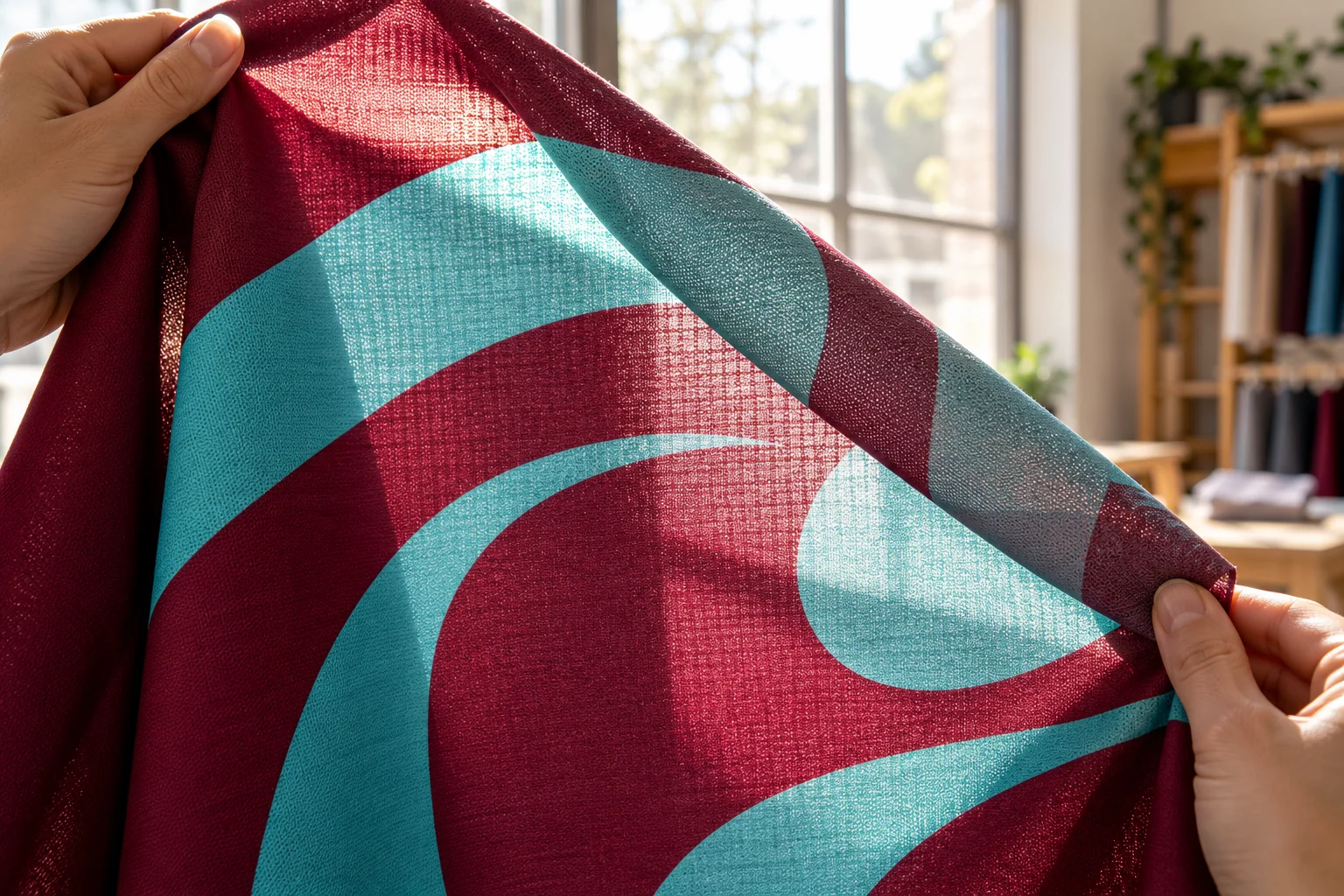
Flag print-through describes how visibly a printed design appears from the reverse of a textile. Buyers may also hear dye penetration used when discussing how a printing system colours the cloth. These phrases do not establish one universal performance level. Fabric structure, ink, processing, artwork coverage and lighting affect the visible result, so a sample of the proposed construction is more useful than an unsupported percentage.
Ask what a percentage measures
A statement about high penetration can be ambiguous unless the supplier explains its measurement and conditions. Is it a visual estimate, an instrument reading or a result on a particular cloth? Front-to-reverse appearance can also vary by colour. Ask for a representative sample rather than assuming one number predicts every part of a multicolour design.
Inspect the light and background
A flag held against a bright window may look different from the same cloth against a dark indoor wall. Turn the sample, change the background and look at both faces under normal light. Consider the intended location rather than choosing the most flattering viewing condition. Record which sample is approved so the reference remains clear when a later batch is ordered.
Distinguish colour from orientation
Even a very visible reverse image on a single layer remains mirrored. Better reverse colour does not rearrange letters or correct an arrow. If the audience must read text on both faces, specify independent readability and discuss a suitable construction. A photograph showing strong colour on the back is not sufficient evidence that both sides meet the communication requirement.
Consider detail on the selected cloth
Open or translucent textiles can reveal more of the background and affect the apparent density of fine artwork. Examine the smallest important part of the logo at final scale. Broad areas of colour and a clear emblem may remain more legible than thin lines. Approve the complete printed sample, not just a saturated colour swatch that omits the design’s difficult elements.
Include it in a complete quotation
Ask Orient Uniforms FZE to identify the proposed fabric, printing route, front-and-reverse expectation and finishing against the relevant SKU. Provide display location, quantity, dimensions and artwork. If a numerical penetration claim is offered, request its basis and relation to the supplied product. The decision should combine acceptable appearance, compatible hardware and a practical care plan rather than one isolated print measurement.
Questions & answers
Does print-through mean two separately printed faces?
No. It normally concerns the visible reverse result on the textile; independently arranged faces are a separate construction question.
Can I approve reverse colour from a website image?
Use it as a reference only. Ask for a relevant sample when the reverse appearance is important to the order.