
How Are Flags Made? Step-by-Step Flag Manufacturing Process
A custom flag normally moves through a series of decisions: agree the brief, prepare artwork, select a compatible fabric and printing process, produce the graphic, cut the shape, finish the edges and inspect the result. The exact sequence varies with the flag type. Understanding these stages helps a buyer approve the right details before a production run begins and recognise what a meaningful sample should demonstrate.
Start with the finished display
Confirm whether the order is a pole flag, shaped promotional flag, table flag or pennant. Record final dimensions and the pole or stand model. Hardware can determine sleeve size, attachment spacing and orientation. For a repeat order, provide an existing sample if possible, together with any changes needed. A previous photograph may not reveal the full construction.
Prepare a production drawing
Artwork should show the finished shape, safe area, seams and any fabric taken up by a sleeve. The production proof needs a clear front and reverse arrangement, particularly when words or directional emblems are involved. Confirm spelling, logo version and proportions. Adobe distinguishes artwork extending beyond the cut boundary from the final trimmed area; the production team should supply the appropriate template and allowances.
Print and fix the colour
A suitable polyester flag may use transfer or direct sublimation. In a transfer workflow, the graphic is printed onto suitable paper before heat transfers it to the textile; direct systems print onto the fabric before fixation. These are alternative production routes, not interchangeable instructions. The selected printer, ink and textile determine the settings, so buyers should approve the result rather than prescribe generic temperatures.
Cut, sew and attach
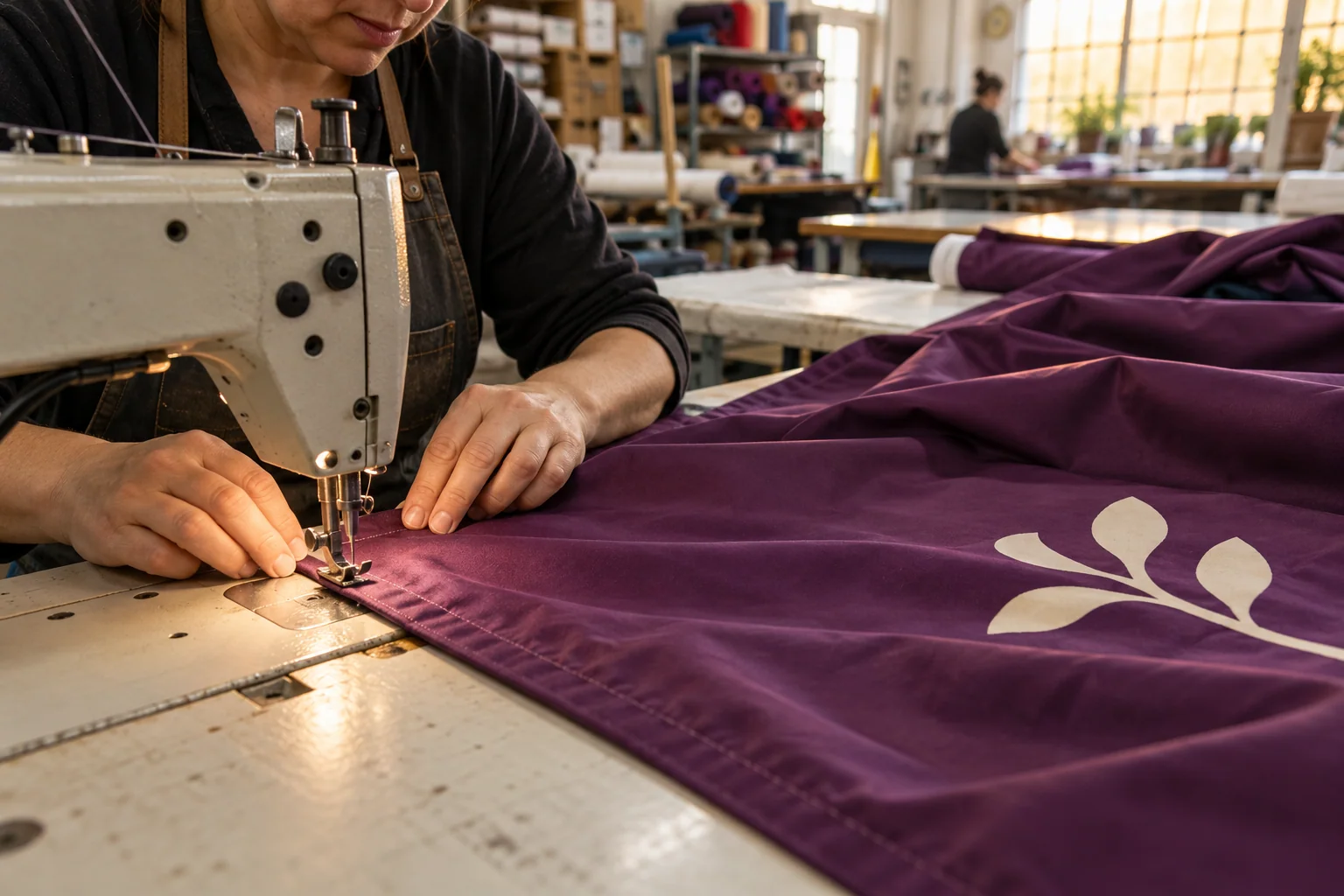
After the relevant production and fixation steps, the cloth is cut and finished to its agreed outline. Hems, header tape, pole pockets, clips or eyelets are added according to the drawing. Curved promotional flags require a shape that matches their frame. Check that stitching does not cross important lettering and that corners and attachment points have been finished consistently.
Inspect before rollout
For a sample or first article, inspect dimensions, colour, image orientation, hems and the fit on the actual support. View it in normal light and, where relevant, against a bright background. For multiple branches, approve one documented specification and identify artwork variants clearly. Send Orient Uniforms FZE the required product SKU, quantity and deadline so the quotation can identify the proposed construction and approval stages.
Questions & answers
Does every custom flag use sublimation?
No. The artwork, textile and order requirements determine the suitable printing or sewn-construction method.
Should I approve a digital proof or a sample?
Approve the layout digitally; a physical sample provides additional evidence of fabric, colour, finishing and hardware fit.