
Internal vs External Halyard Flagpoles: What Is the Difference?
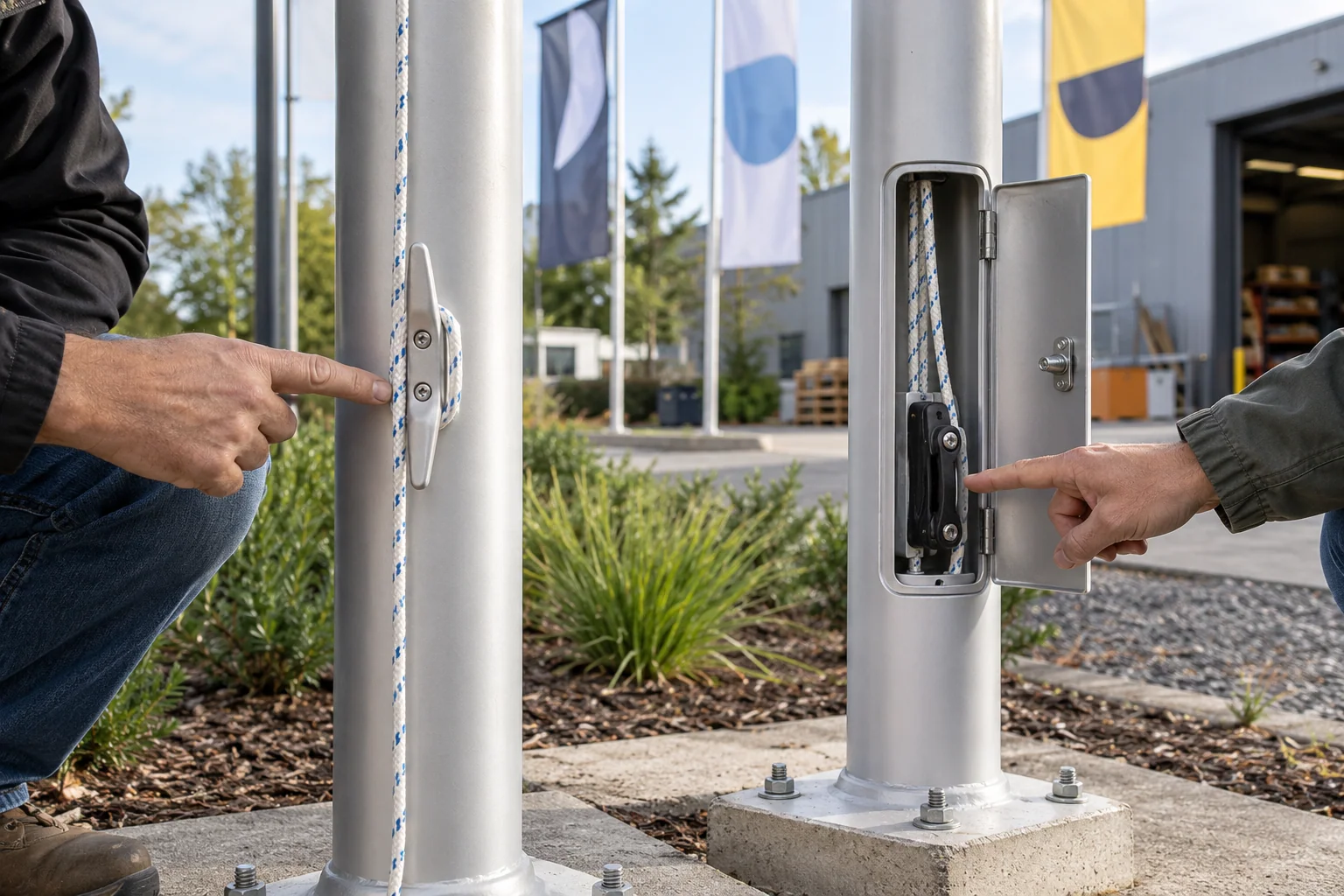
An external halyard flagpole has its operating rope visible outside the shaft. An internal halyard system encloses the rope or cable arrangement within the pole and provides a model-specific access and operating mechanism. Both approaches need suitable installation, compatible flags and maintenance. Choose by the site’s operating needs and documented equipment specification, rather than assuming that an internal system removes all noise, wear or servicing requirements.
Compare the everyday operation
With an external arrangement, the operator uses the exposed rope and the specified securing cleat. Internal systems may use a cam cleat or winch and have different access requirements. Flagpole Warehouse publishes separate instructions for these mechanisms. Ask to understand the actual operating method before buying, especially if several facilities staff will share responsibility for raising and lowering the company flag.
Consider access control
An enclosed mechanism can offer a different way to manage access, depending on the supplied door and locking arrangement. Confirm what is actually included with the model. External systems also need a deliberate process for securing the rope and limiting unauthorised operation. Neither label substitutes for the property’s management procedure; designate who holds access equipment and who is authorised to use the display.
Review appearance and sound expectations
A visible external rope changes the appearance of the shaft, while internal systems present a different exterior. Ask how the proposed flag attachment and mechanism behave during normal use. Do not accept a universal silent-operation claim from the internal label alone. Flag clips, collars, weights and the fabric can contribute to the complete display’s behaviour, so discuss the actual assembly and location.
Compare servicing requirements
Both types need their supplied inspection and maintenance procedure. An internal mechanism is enclosed, but it still contains moving and connecting parts. Ask how maintenance access is provided and which components require a qualified service team. For either type, unusual resistance, damaged rope or loose fittings should be reported. Avoid attempting a repair by following instructions for another mechanism that happens to have a similar height or appearance.
Specify the complete system
Include the installed height, intended flag dimensions, construction, access arrangement and location in the enquiry. Request the actual model documentation and a clear equipment and installation scope. Share the relevant SKU and site information with Orient Uniforms FZE. Keep the final operating instructions and part references with the facilities record, so future staff can identify the mechanism and request compatible replacement components without guessing from the outside appearance.
Questions & answers
Is an internal halyard pole maintenance-free?
No. Follow the particular system’s inspection and service instructions. Enclosing a mechanism does not remove wear or the need to check operation, flag connections and accessible components.
Can an external system be converted to internal?
Do not assume conversion is possible or appropriate. Ask the manufacturer or a qualified pole specialist to assess the exact model and propose a documented solution if available.