
Polyester vs Nylon Flags: Which Material Is Better?
Polyester versus nylon is a useful starting question, but it does not provide a complete flag specification. Both names describe fibre families, while the finished textile also has a construction, weight, finish and particular print compatibility. A meaningful comparison uses actual proposed samples for the same display, rather than assuming that every polyester flag or every nylon flag behaves in the same way.
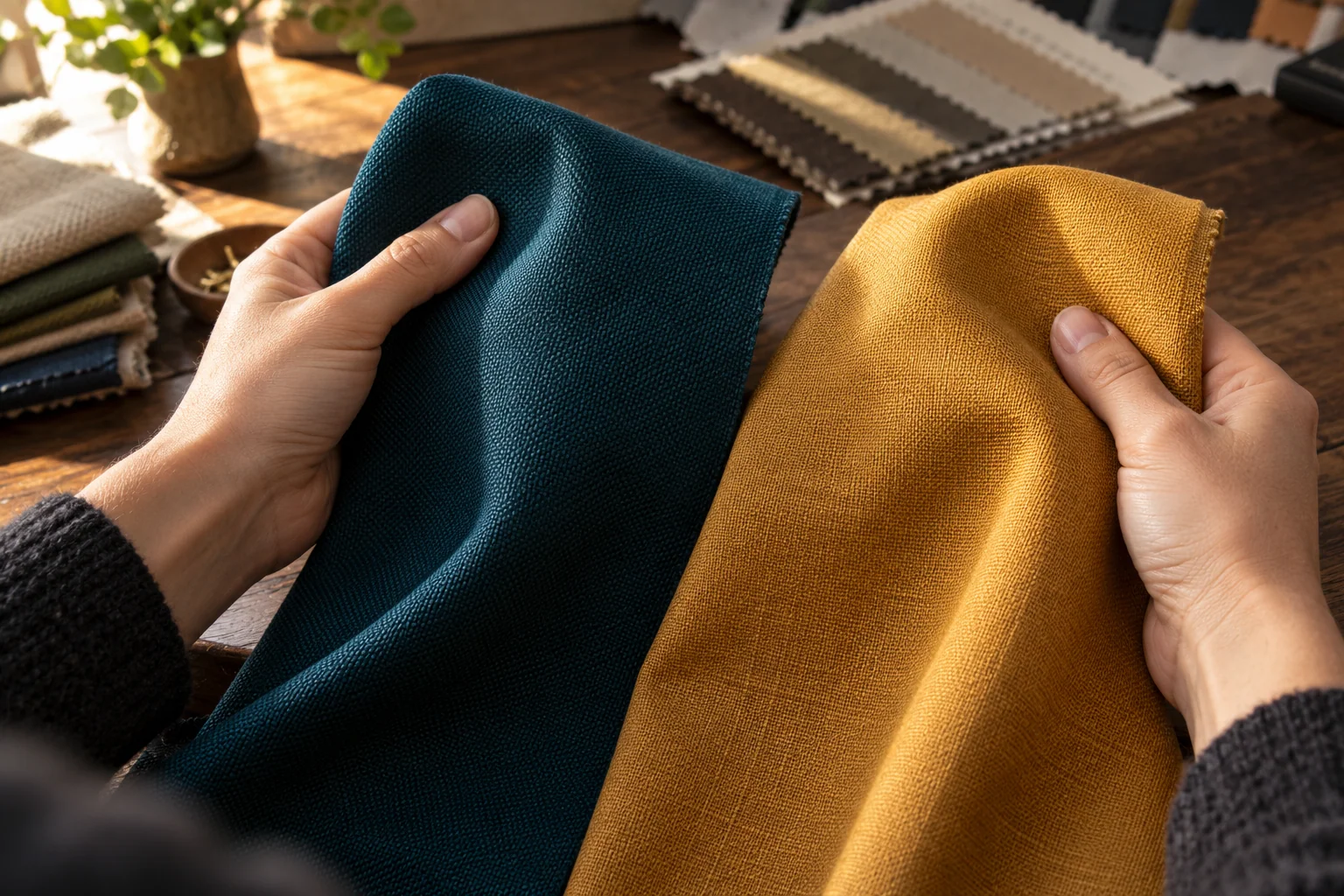
Ask about the complete textile
Request fibre composition, knit or weave, weight where available and the proposed finish. Two textiles of the same fibre may differ substantially in transparency, surface feel and movement. A smooth-looking sample should not be taken as proof of a particular fibre content. Keep the supplier’s material reference alongside the approved sample so a later reorder does not substitute an unspecified alternative.
Check print compatibility carefully
Conventional sublimation workflows commonly use suitable polyester textiles. Do not apply that compatibility automatically to nylon or to an unknown blend. If a nylon-based option is proposed, ask which printing system and preparation are intended for the specific cloth. The buyer’s role is to approve a suitable finished result, rather than select a heat process from the fibre name alone.
Compare appearance and handling
Look at both samples at the intended size and in relevant lighting. Examine the clarity of the emblem, reverse visibility, drape and edge finish. A small loose swatch does not fully predict how a complete flag will move on its support, but it helps identify obvious differences. For a critical project, ask whether a finished sample can be checked on the actual hardware.
Treat outdoor claims as product-specific
Avoid statements that one fibre always survives longer in every climate. Yarn construction, finishing, abrasion, wind exposure and care influence the result. Ask for evidence supporting any UV, strength or service-life claim, and check that it applies to the quoted product. An indoor display sample cannot establish suitability for a continuously flown exterior flag.
Buy against the intended job
Prepare a brief with the SKU, finished size, viewing directions, location and existing support details. Ask Orient Uniforms FZE which relevant materials can be quoted, and have the exact composition and construction named in writing. Availability should be confirmed rather than inferred from a general guide. Select the option that meets the brief and can be approved with useful evidence, not the fibre with the strongest marketing description.
Questions & answers
Does polyester mean the flag is sublimated?
No. The fibre and the printing method are separate specification fields; ask the supplier to identify both.
Is nylon automatically unsuitable for flags?
No general fibre comparison establishes that. Assess the proposed textile, printing process and finished construction for the intended use.