
How to Prevent Flag Edges from Fraying in Strong Winds
Preventing flag fraying begins with a suitable display arrangement and regular inspection, not a promise that stronger stitching makes fabric immune to wind. The free edge is repeatedly moving, while contact with nearby objects can create additional damage. Check the flag and its location together. For a replacement, discuss the actual dimensions, exposure and finishing with the supplier rather than requesting a generic heavy-duty flag without defining the conditions.
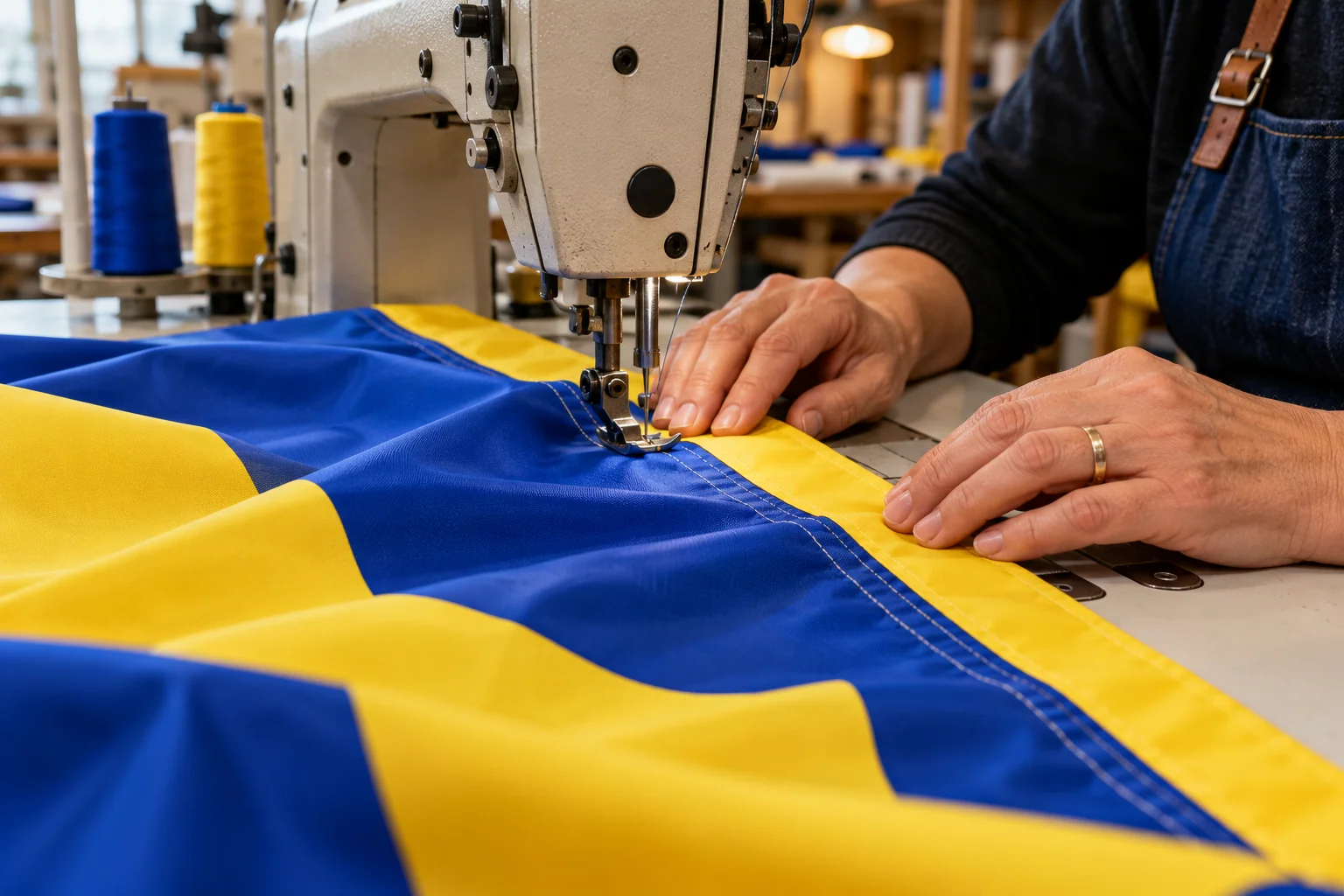
Look for repeated contact
Observe from a safe position whether the cloth can touch a wall, tree, sign, cable or neighbouring pole. Ask the facilities team to assess any clearance problem. Olympus and other flag makers recommend avoiding damaging contact around a display. Replacing the fabric without addressing a snagging surface can repeat the same failure, so include photographs of the entire location in the maintenance record.
Inspect corners and the free edge
During a scheduled removal, lay the flag flat and examine the hem, stitching and corners. Photograph small defects and note their position. A repairer needs to know whether a loose thread is superficial or part of a separating seam. Do not cut away damage or add household adhesive before asking for advice; that can change both the usable dimensions and the repair options.
Specify finishing in the order
Ask which hem, corner and attachment construction is proposed for the selected fabric and flag size. Request a sample or clear detail photograph where the finish is important. Avoid treating the number of stitch rows as the only quality measure. The finished assembly must suit its purpose, and the supplier should explain the offered construction without making an unsupported claim that it will withstand every wind condition.
Follow operating limits
The flag and pole system need an operating routine appropriate to their instructions. Assign a responsible team to monitor conditions and remove the display when required by the approved plan. Do not add weights, reinforce the pole yourself or use extra-large fabric to improve visibility without reviewing compatibility. The permitted flag size and loading belong to the complete assembly, not to the textile in isolation.
Review wear before the next order
Compare photographs over time and keep the original flag specification. If the same corner repeatedly fails, ask whether positioning, attachment or construction should change. Orient Uniforms FZE can review an enquiry containing the SKU, dimensions and accessible photographs. Confirm the final finishing and intended use in writing; maintenance, weather exposure and local clearance remain relevant after a new flag is supplied.
Questions & answers
Will extra stitching stop all fraying?
No. Finishing is only one factor. Exposure, fabric condition, attachment and repeated contact with surrounding objects also need review.
Can a frayed edge be re-hemmed?
Sometimes, after inspection. A repairer should assess remaining fabric, design clearance and attachment condition before agreeing whether repair is worthwhile.