
How to Choose Flag Fabric for Windy and Coastal Areas
A wind-resistant flag material cannot make every outdoor display suitable for every coastal condition. Choose the textile as part of a complete system that includes flag dimensions, seams, attachments, pole or frame, base and operating instructions. Coastal sites may involve changing winds, salt and abrasive contact. A location-specific assessment and a practical inspection plan are more useful than a blanket promise about one type of cloth.
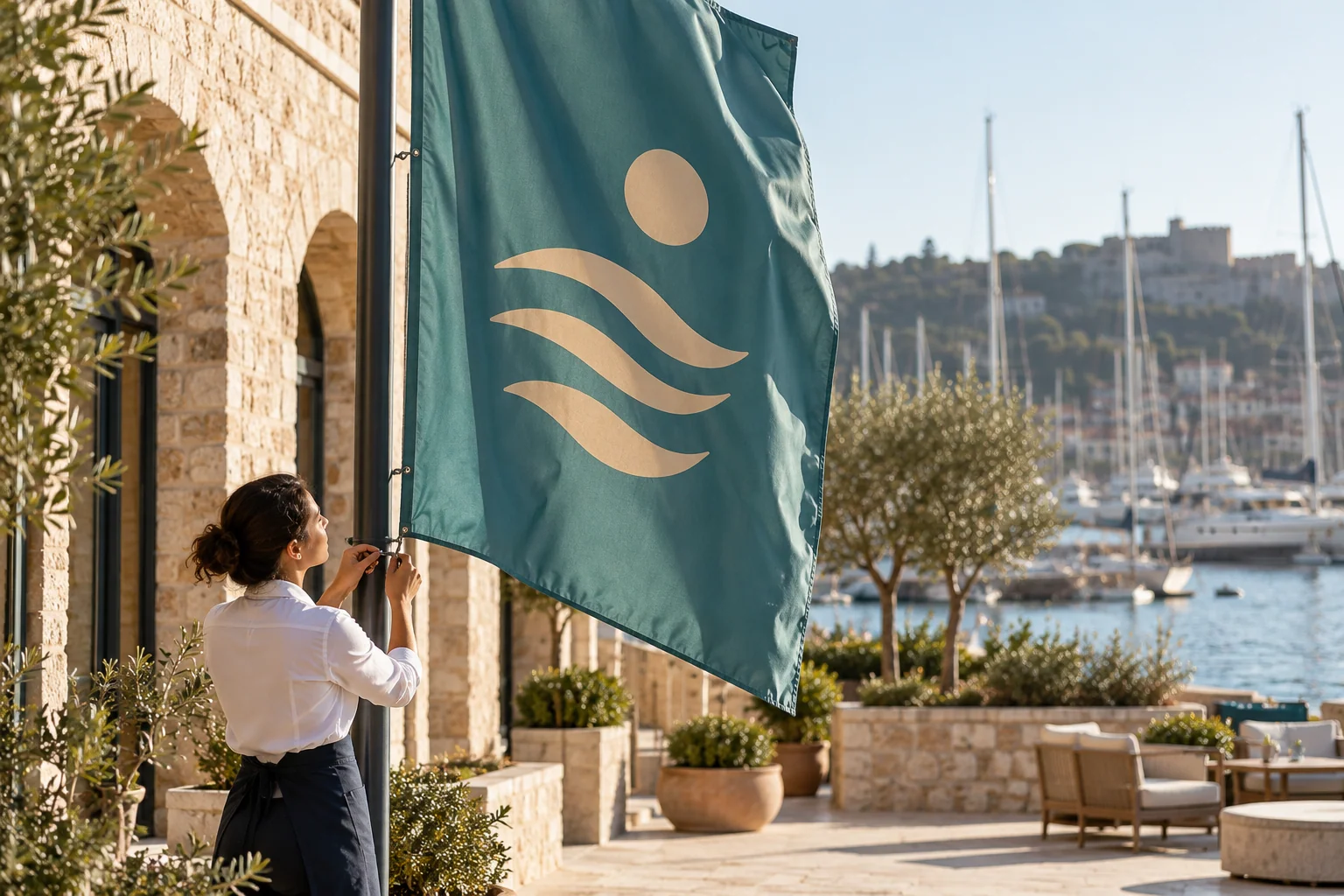
Describe the actual site
Provide photographs taken safely from the ground and identify whether the position is sheltered, open or close to obstructions. Explain how long the flag will remain displayed and who will supervise it. A garden event, building forecourt and waterside frontage have different requirements. Let a competent installer assess the support and surrounding conditions rather than selecting a fabric first and treating the rest as an afterthought.
Discuss open and dense textiles
Mesh may be proposed where airflow through a particular graphic is useful, but openness also changes colour appearance and small-detail visibility. A denser textile offers a different visual surface, not an automatic guarantee of better service. Ask for the exact material reference and relevant guidance. Do not infer a numerical wind limit from the words mesh or heavy duty alone.
Inspect the edges and attachments
The fly edge, hems, header and any sleeve experience repeated movement. Check for loose stitching, tears, worn connection points and contact with adjacent surfaces. Attachments should match the pole or frame rather than being improvised because a hole or clip appears to fit. If damage occurs, have the cause assessed instead of simply replacing the cloth with a heavier version.
Keep operating limits practical
Follow the system manufacturer’s instructions and venue requirements, including any removal procedure for unsuitable conditions. Never rely on the flag material to certify a base, bracket or foundation. Plan who can safely take the display down and where it will be stored. Salt or dirt cleaning should follow product-specific care guidance, avoiding treatments that have not been approved for the print and cloth.
Order against a maintainable specification
Send Orient Uniforms FZE the product SKU, dimensions, artwork, quantity, location and hardware references. Ask which textile and finishing options can be considered and request evidence for important performance claims. Retain the approved specification for repeat orders and set a routine inspection record. Confirm the quoted product’s suitability and limitations in writing; no general material guide replaces an installer’s assessment of a particular exposed site.
Questions & answers
Is mesh safe in all coastal wind conditions?
No. The complete system requires defined operating guidance and assessment; an open textile does not remove wind forces.
Should a damaged coastal flag be replaced with thicker cloth?
First identify the cause and check hardware compatibility. More weight may change the assembly without solving the original problem.